Twin CV
Career Tips

How to Write a CV in 2026

A step-by-step guide to a CV that is quick to scan, easy for software to read and specific about what you achieved.

How to Write a CV in 2026

Most CV advice comes either as a template without reasons or as a list of rules that contradict each other. The rules make more sense once you know who reads a CV and how: first, often, software that extracts and searches the text; then a person skimming for a few specific answers; then, if it goes well, a hiring manager who reads properly.

This guide walks through a CV in the order you should write it — from choosing the target to the final check — with examples you can adapt. It says “CV” throughout; in the US the same document is called a resume, and the difference by country is a topic of its own.


Pick the target first
Step 1

Pick the target first

The most common reason a CV feels weak is that it was written for no one in particular. It lists everything you have done at the same volume, so nothing stands out.

Before you write a line, decide which job the CV is for. Collect three to five real postings for that role and mark what they have in common: the skills named in every one, the tools that keep coming up, the level of responsibility they describe. That list is your brief. Everything on the CV should either prove something on it or earn its place some other way.

For example, five postings for a junior data analyst might all ask for SQL, a visualization tool, clear communication with non-technical colleagues and experience cleaning messy data. That is the list your CV has to prove — and it tells you that your university statistics project deserves more space than your summer job in a café.

If you apply for different kinds of roles, keep a longer master CV with everything — every role, project, number and course — and cut a focused version from it for each direction. Writing the master once makes every later application faster.

Use the standard sections
Step 2

Use the standard sections

Readers and parsers both look for familiar headings in a familiar order. For most people that is:

  1. Contact details — name, phone, email, city and country, plus a LinkedIn or portfolio link if it helps.
  2. Summary — two to four lines on who you are professionally and what you bring.
  3. Work experience — most recent first, with job title, employer, location and dates.
  4. Education — most recent first; above experience only if you are a recent graduate.
  5. Skills — the tools and methods the target role asks for, grouped sensibly.
  6. Optional extras — languages, certificates, projects, volunteering, publications.

Personal details depend on the country. In the UK, the National Careers Service advises leaving out your age, date of birth, marital status and nationality, while in other markets a photo or date of birth is still common. Check the local norms before you add them.

Leave out what only takes up space: the words “Curriculum Vitae” as a title (your name is the title), a full street address, “references available on request”, and hobbies unless they show something the job needs.

Write a specific summary
Step 3

Write a specific summary

The summary is the first thing a person reads, so it should answer “who is this, and why should I keep reading?” in under 60 words. A reliable formula:

  • Who you are: your role or level, and your field.
  • What you're good at: two strengths the target role needs.
  • Proof: one concrete result or scope.
  • Direction (optional): what you want next, if it isn't obvious.

Weak: “Hard-working, results-driven professional with excellent communication skills seeking a challenging role.”

Better: “Customer support lead with six years in B2B software. Built the team's first knowledge base and cut repeat tickets by a third. Looking to move into customer success for mid-market accounts.”

The second version could only be about one person. That is the test. For more models, see our resume summary examples by role.

Turn duties into results
Step 4

Turn duties into results

Experience bullets are where most CVs lose the reader. A duty says what the job was; a result says what changed because you were in it. Use the pattern action + what + how + outcome:

  • “Responsible for supplier invoices” → “Cleared a three-month invoice backlog in five weeks by introducing a weekly matching routine.”
  • “Taught 9th-grade math” → “Raised my 9th-grade classes' end-of-year pass rate by rebuilding exam review around weekly quizzes.”
  • “Worked on the mobile app” → “Rebuilt the app's sign-up flow in React Native, removing two screens and the most common Android crash.”
  • “Handled customer complaints” → “Resolved around 40 escalated complaints a month and wrote the reply templates the team still uses.”

Three to six bullets per recent role is plenty; older roles can shrink to one or two lines. Start each bullet with a verb that carries weight (led, built, cut, launched, negotiated, redesigned, trained, automated), keep tenses consistent — present for your current job, past for the rest — and drop the “I”.

No numbers? Name the concrete change instead. And never invent a figure: a range you can defend in an interview beats a precise number you can't.

Skills, education and extras
Step 5

Skills, education and extras

  • Skills: list the hard skills the role asks for — tools, languages, methods — and group them if the list is long (“Analytics: SQL, Looker, Python”). Skip lists of soft skills; prove teamwork or leadership inside your bullets instead.
  • Levels: add a level only when it means something to the reader, such as a language level or a certification grade. A five-star bar next to “Excel” tells nobody anything.
  • Education: degree, institution, years. Add a grade, thesis or relevant modules only if they are recent or strong.
  • Languages: give a level for each, ideally on a shared scale such as the CEFR levels (B2, C1) used across Europe.
  • Certificates and projects: include the ones that support the target role, with the year. For graduates and career changers, a strong projects section can carry as much weight as a job.

Whatever you include, keep the format identical from entry to entry: the same date style, the same order of title, organization and place.

Length, layout and file
Step 6

Length, layout and file

Length depends on the market and your career stage. UK careers site Prospects recommends no more than two A4 pages, and US guidance is similar: the Higher Education Recruitment Consortium advises that even with years of experience, a resume should be no longer than two pages. Academic CVs are the exception and can run much longer.

For layout, clarity wins:

  • One column of real text is the safest choice for online application portals.
  • Standard headings, consistent dates and plenty of white space.
  • No important text inside images, text boxes, headers or footers.
  • A text-based PDF unless the posting asks for Word, named sensibly: firstname-lastname-cv.pdf.

Design isn't the enemy. A well-made layout helps when a person reads your CV first — a referral, an email to a hiring manager. Keep a plain version for portals and a designed one for people.

Our ATS-friendly CV guide explains why these choices matter. If you want designs that already follow them, Twin CV's 19 CV designs include a one-column Plain ATS layout for strict portals.

Mistakes that cost interviews
Avoid these

Mistakes that cost interviews

  1. A generic summary. If it could describe anyone, it persuades no one.
  2. Duties instead of results. The reader knows what the job involved; they want to know how well you did it.
  3. The same CV for every posting. The words and order that fit one role rarely fit the next.
  4. Unexplained gaps. A one-line note — study, caring, travel, a health break — reads far better than silence. Germany's Federal Employment Agency even advises naming any break longer than two months.
  5. Old roles at full length. A job from fifteen years ago rarely needs more than a line.
  6. Typos and inconsistencies. Mixed date styles, two spellings of the same tool, a misspelled company name.
  7. Claims you can't back up. Every line is a possible interview question. Write only what you can talk about comfortably.
  8. An email address from school days. Use a plain firstname.lastname address for applications.
A final check
Before you send

A final check

  • Does the summary name the role you are applying for, or something close to it?
  • Does each recent role show at least one result, not only duties?
  • Do the skills you list use the posting's words — where they are true?
  • Can you select and copy all the text in the PDF?
  • Are dates, job titles and company names consistent everywhere?
  • Has someone else read it — or have you read it aloud — to catch typos?

If the blank page is the hardest part, start by talking instead of typing: Twin CV's assistant builds your CV by chat, one question at a time, and asks for a number where one would help without ever inventing one. Already have an old CV? Import it from a PDF, a Word file or a photo and edit from there. You can try both in Quick CV without an account. On Premium, the ATS score then reviews the finished CV and lists what to fix. Once the CV is solid, you can add an interactive layer on top.

FAQ

CV writing questions

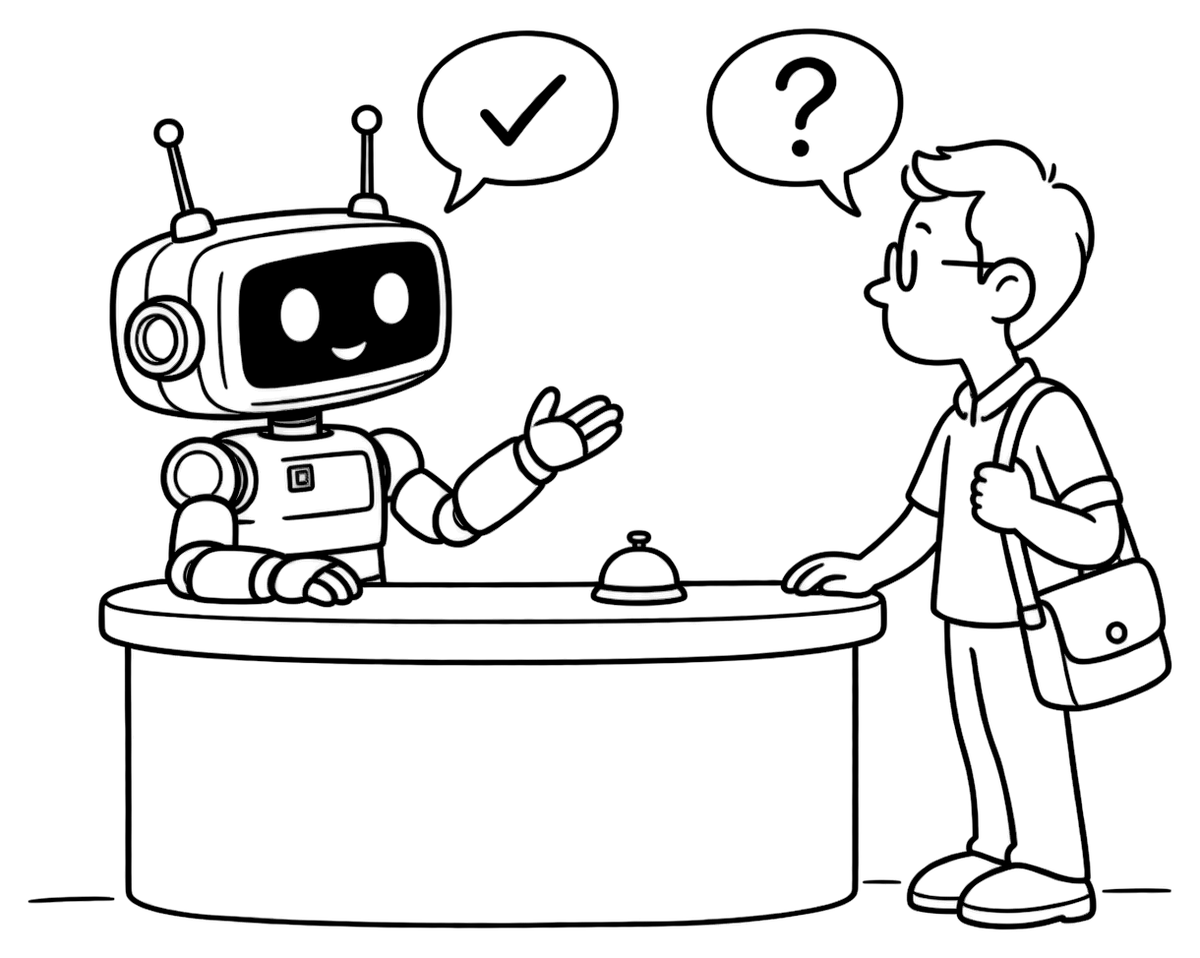
A visitor asks a question at a help desk and the twin robot answers it
How long should a CV be?

For most jobs, one to two pages. UK guidance such as Prospects recommends no more than two A4 pages, and in the US a resume rarely goes beyond two pages even for experienced candidates. Academic and research CVs are the exception and can be much longer.

Should I put a photo on my CV?

It depends on the country. UK and US employers generally don't expect one; in Germany it is optional, and in Turkey it is still common. Our guide to CV vs resume by country covers the details.

Do I need a different CV for every job?

You need a tailored one, not a new one. Keep a master CV and adjust the summary, the order of your bullets and the skills for each posting — our guide to tailoring a CV to a job description shows how.

Should I write my CV in the first person?

The usual convention is to drop the pronoun: “Led a team of five”, not “I led a team of five”. Use the present tense for your current role and the past tense for earlier ones, and stay consistent.

Related reads

Career Change CV: Reframe Your Experience
November 9, 2026

Career Change CV: Reframe Your Experience

CV vs Resume: The Difference by Country
November 8, 2026

CV vs Resume: The Difference by Country

What Is an Interactive Resume?
November 8, 2026

What Is an Interactive Resume?

Your twin is one conversation away.

Start free with Quick CV

Stay in the loop

Occasional product news and practical career tips — only when we have something worth your time.